
Accountable for Peace
If we want to stop the wars, we need to make those in charge accountable for peace

When I realized the post Si vis pacem para pacem was getting too long, I decided to split it into two parts. This is the continuation.
Black hexagons
Upon moving to Argentina, I was struck by the prevalence of black hexagonal warning labels on many common food products — items you'd find in any supermarket worldwide. Argentine law mandates that manufacturers clearly label packaging if a product contains harmful ingredients.
It's not uncommon to see a package of cookies plastered with three or four of these "black marks," warning of "excess fat," "excess sugar," and the like.

Wouldn't it be fascinating if we could apply similar labels to politicians, business leaders, and public figures? Imagine a politician addressing voters, with every video featuring a black hexagon stating, "Lies in 68% of cases." Or picture an interview with a renowned entrepreneur, the screen bearing the warning, "Profits from war in Lebanon."
"With great power comes great responsibility." - Uncle Ben
As Uncle Ben sagely advised Peter Parker in the 2002 Spider-Man film, "With great power comes great responsibility." But responsibility doesn't manifest on its own — it's only possible when great power is paired with great accountability.
War is a racket
Wars don't spontaneously erupt; they're instigated by specific individuals — those who stand to benefit. While rulers may officially declare wars, they're powerless without business backing. Behind every conflict, there are always beneficiaries pulling the strings.
“War is a racket. It is the only one international in scope. It is the only one in which the profits are reckoned in dollars and the losses in lives.” - Smedley Butler1
Let's set aside the lofty rhetoric of fighting for democracy, denationalization, or reclaiming ancestral lands — save that for propaganda and history books. War is, at its core, a business venture. Or, as General Butler aptly put it, a racket sustained by broken feedback loops.
Broken feedback loops ignite wars
The 2008 mortgage crisis offers a stark example of a broken feedback loop. While countless ordinary homeowners lost everything, top executives at major financial institutions not only escaped consequences but often profited handsomely from the crisis. Their companies hemorrhaged money, yet CEOs continued to pocket multi-million dollar bonuses.
Historically, wars featured a more direct feedback loop. When an ancient Athenian citizen voted for war, it meant personally standing in the phalanx, risking life and limb for the city's victory. When figures like Alexander the Great, Julius Caesar, Richard the Lionheart, Genghis Khan, or Alexander Nevsky proclaimed, "We go to war," that "we" included them fighting alongside their warriors on the front lines.

However, since the era of Napoleon Bonaparte — who preferred directing battles from a safe vantage point using telescopes and messengers — modern leaders have increasingly distanced themselves from the conflicts they initiate.
In today's world, there's a stark disconnect between those who start wars and those who fight in them. A vast financial and class divide separates the two groups. Business and political elites instigate wars, while the poorest segments of society perish in trenches. The parallel to the 2008 mortgage crisis is painfully apt — only now, instead of homes, people are losing their lives.
The decision-makers deploying troops to Iraq or launching attacks on Ukraine never see combat themselves. This broken feedback loop allows those in the White House or Kremlin to remain comfortably insulated while repeatedly igniting conflicts, paying the price with other people's blood while facing zero accountability.
More accountability, more trust
These days, companies are held to account for a multitude of issues — environmental impact, waste management, labor practices, social responsibility, and tax compliance, to name a few. Yet, no one questions whether a company contributes to peace or fuels war. Politicians face even less scrutiny. Perhaps this explains why, according to the 2024 Edelman Trust Barometer Global Report, politicians rank dead last in public trust.
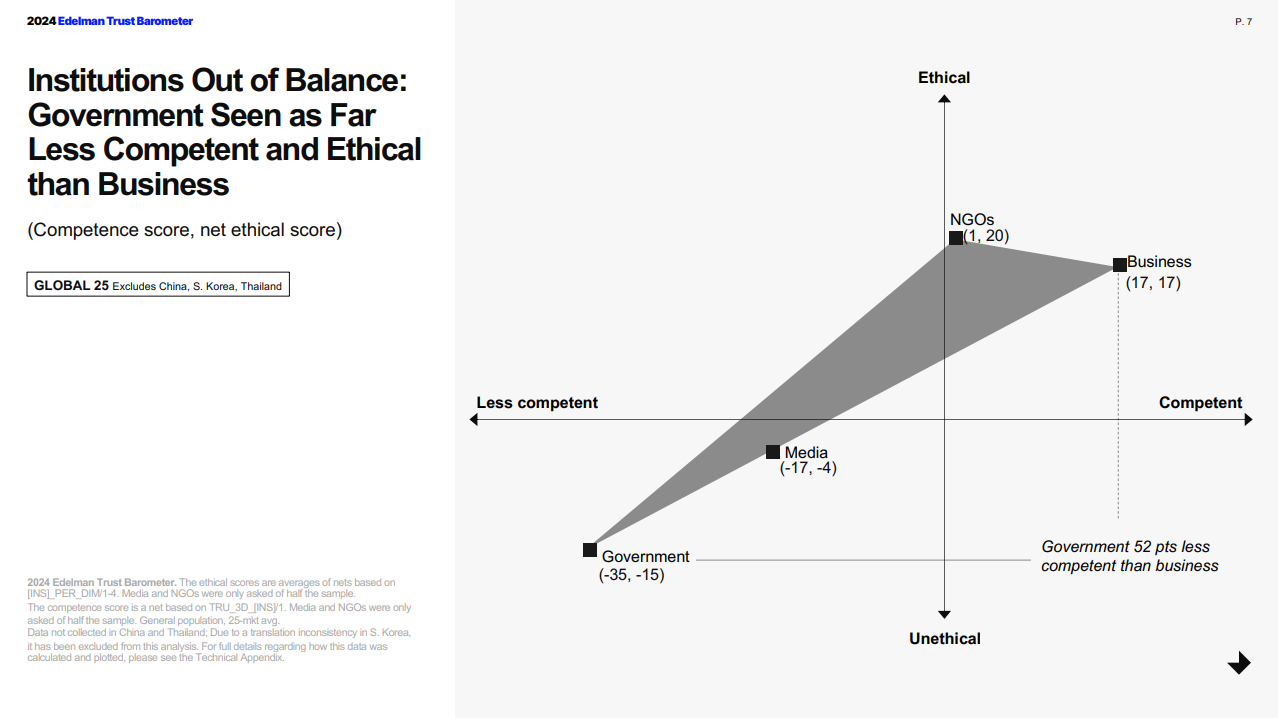
What if we implemented a system to evaluate and label companies based on their contributions to a peaceful world? Imagine a ranking of companies and their CEOs, from those most actively promoting peace to those stoking the fires of war. We could create a similar rating for politicians. While tracking companies can be challenging, politicians lead public lives — their words and actions are on full display. This transparency could make them truly accountable for peace.
When Noam Chomsky accuses American presidents of terrorism, or when Julian Assange and his co-authors indict America for territorial aggression in their book, it's often dismissed as the radical rhetoric of fringe activists. But a public rating system with transparent criteria could provide a critical lens through which to view the actions and decisions of public figures.
By maintaining such a rating and calculating a "Personal Peace Index," we might be surprised to discover how many politicians and business leaders — previously considered neutral — are actually war profiteers and lobbyists. Imagine if every public address by a politician or business leader came with labels like "interested in war," "complicit in conflict," "war promoter," or, conversely, "peace advocate."
Addressing the Skeptics
Critics might argue, "We can't even hold politicians and businesses accountable for climate change. How can we possibly make them answer for war?" They'll claim that these powerful figures will just bury us in eloquent excuses while carrying on with business as usual.
"We should grab a politician by the scruff of the neck and drag him a few miles away from Earth" - Edgar D. Mitchell
When climate scientists like Bill McKibben warn that a 1.5°C rise in ocean temperatures spells disaster, the average person (myself included) might struggle to notice such a subtle change in their morning shower water. We shrug and go about our day.

It's challenging to establish clear cause-and-effect relationships with issues like global warming, ocean acidification, or ozone depletion. There's always someone ready to say, "It's not our fault. It's too complex. These things just happen."
The Undeniable Visibility of War
Unlike climate change, war leaves no room for plausible deniability. While the signs of climate crisis often elude direct perception, war's impact is glaringly obvious. Every bullet fired can be traced — from the finger on the trigger to the mouth that gave the order, right up to the bank account swelling with profits from arms sales.
War can be photographed, filmed, documented, and proven beyond doubt. While pictures of melting glaciers might feel distant and abstract, before-and-after images of war-torn cities hit home for everyone. It's no wonder war dominates news headlines.
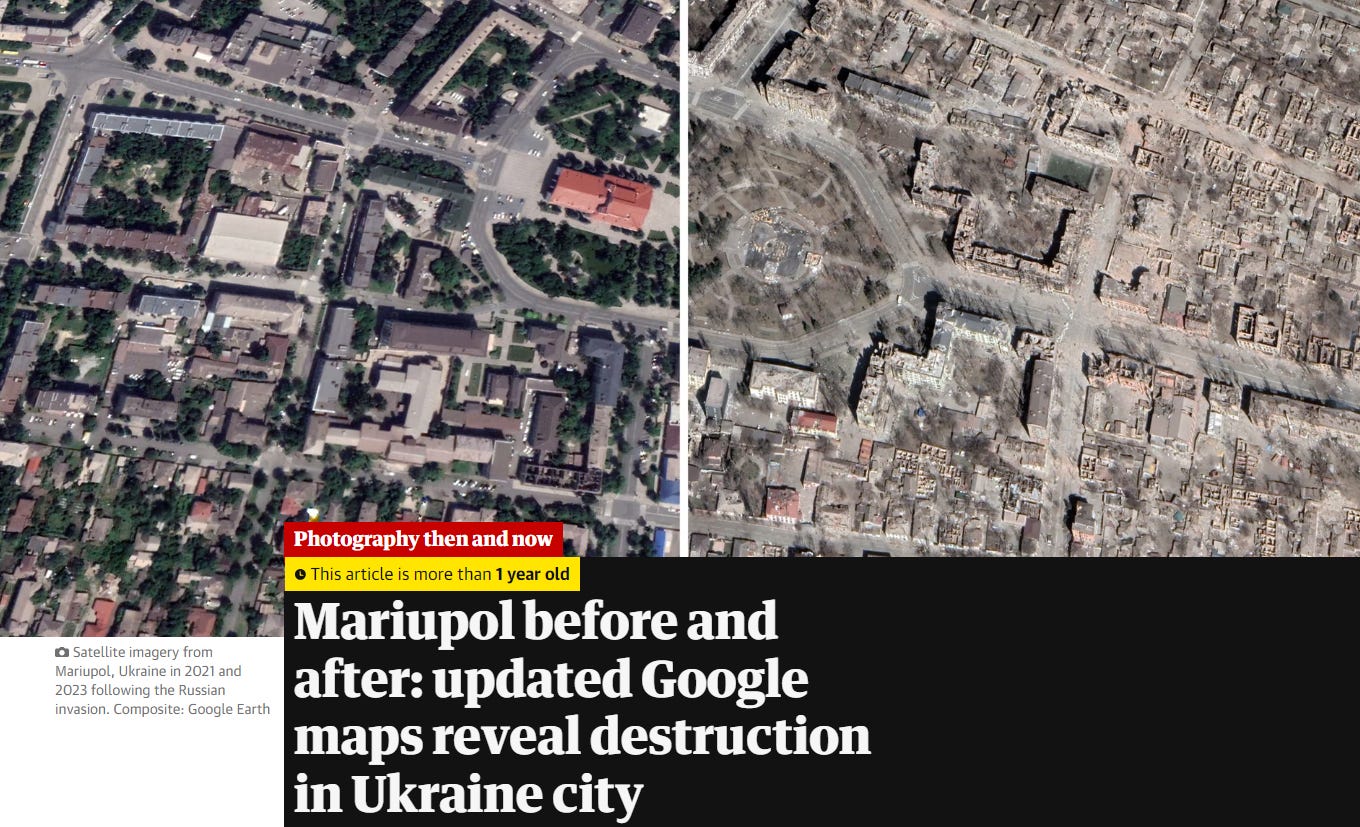
The problem is that these news stories rarely (if ever) name the companies profiting from endless conflict. The connections between these firms and the politicians advancing their interests remain even more taboo. It's high time we asked: Why?
Naturally, both politicians and businesses will fight tooth and nail against any peace rating or labeling system. They'll cry foul, claiming the index is flawed and that they've been slandered. But what can countries like Russia or Israel do about ranking at the bottom of such a list? Perhaps they'd be compelled to stop their wars.
Transparent and peer-reviewed
Maintaining such an index would require developing a robust methodology, gathering expertise, and employing specialists to keep the data current. To earn public trust and interest, the system must be completely transparent and peer-reviewed. We'd need a pool of respected scientists to verify the methodology and confirm the accuracy of calculations. This human effort comes at a cost. So who could finance this crucial work?
"Farmers" vs. "Morticians"
The Global Industry Classification Standard recognizes 74 distinct industries worldwide. While it's an oversimplification, let's imagine dividing all businesses into just two categories: "farmers" and "morticians." "Farmers" sell food, so it's in their interest for clients to live long, healthy lives. "Morticians" provide funeral services, so they benefit when more people die.
"Morticians" pour vast sums into lobbying efforts. In the brilliant film "Thank You for Smoking," the protagonist argues that tobacco companies want their customers to live as long as possible — after all, the longer they live, the more cigarettes they'll buy! By the same token, weapons manufacturers benefit when soldiers survive longer, as they'll fire more bullets. While true, we mustn't forget that those bullets — and those cigarettes — ultimately claim lives.
Peace Lobby
Despite their carefully crafted narratives, "morticians" profit from and promote war, while "farmers" suffer losses. As more young people die in combat or become disabled from injuries, fitness clubs lose potential clients. Manufacturers of sports equipment and attire also take a hit. Countries at war see plummeting tourism, leaving hotels, restaurants, and entertainment venues struggling. Wartime often sees declining birth rates, impacting producers of children's goods — from toys and food to clothing.
In reality, the potential for a peace lobby could rival or even surpass the influence of war profiteers2. The vast majority of people have no interest in war, and many combat veterans regret their experiences. The challenge lies in the fact that peace-loving individuals not only reject war but are often reluctant to actively oppose it. After all, fighting against anything — even war itself — involves conflict and confrontation.
Non-violent accountability
The silver lining here is that creating an individual peace rating for politicians, business leaders, and public figures isn't about waging a new kind of war. Instead, it represents a non-violent act of transparency and accountability. We already have tools like the Global Peace Index and reports by similar organizations. It's time to take the next step toward a more peaceful world and create a Personal Peace Index.

I'm not sure if those black hexagons actually influence Argentinians' eating habits, but they certainly make me think twice before tossing anything into my shopping cart. Yet speed feedback signs do indeed make drivers adhere to speed limits. And CCTV surveillance cameras do indeed reduce the number of crimes in their area of operation. When a person knows they are being watched, when they understand that they will be held accountable for their words and actions, they are much more inclined to behave in a conscientious manner.


We have already learned to count other people's money, as Forbes, Fortune, and Financial Times regularly publish rankings of wealthy individuals. Now we need a list of businessmen, politicians, and public figures by name, indicating who among them is a contribution to peace and who promotes war. If we want to stop the wars, we need to make those in charge accountable for peace.
Quoting Daniel Schmachtenberger from his interview to Nate Hagens
Just to name a few military contractors: Boeing, Raytheon, General Dynamics, Lockheed Martin, Northrop Grumman